Spanish voice actor websites, one language, several reads.
A Spanish voice actor website should open with the Spanish you speak natively and say which buyers it is for. Neutral, Latin American, US Hispanic and Castilian reads are cast separately, so each variety you can hold for a full script gets its own reel and label, and anything you cannot hold stays off the site.
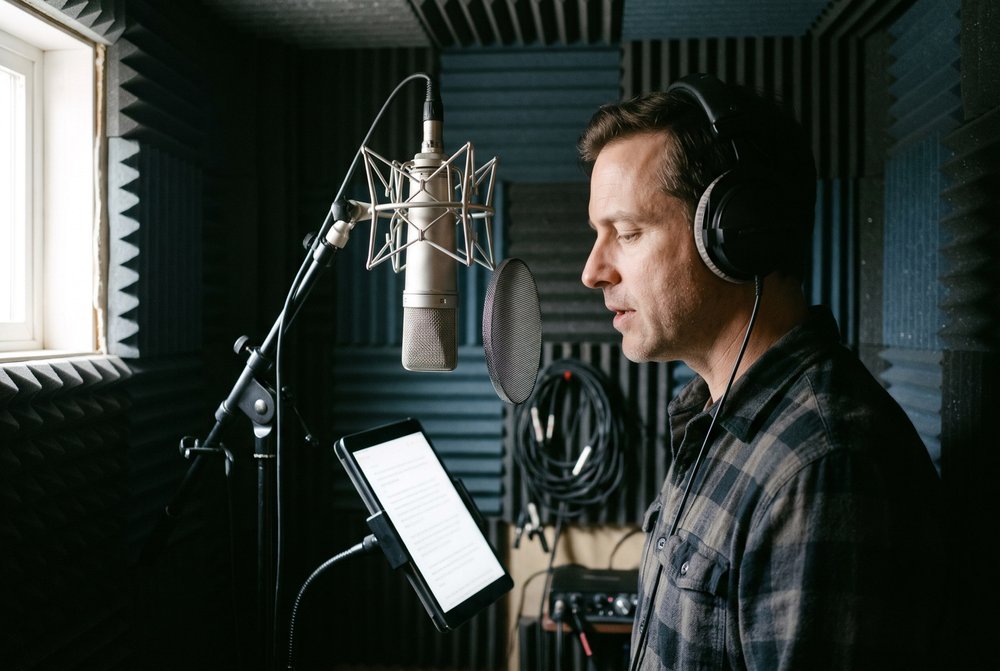
Which Spanish does the brief ask for?
A Spanish brief almost always names a variety before it names a tone. Answer three questions before you decide what the first screen plays.
What were you raised speaking?
Your native variety is the read you can give on any script, on any day, without thinking about it. Put it first and name it plainly: Mexican, Colombian, Argentine, Caribbean, Castilian or whichever it is. A named accent is easier to cast than a vague promise of every Spanish at once.
Can a second variety survive a whole script?
Test it before it goes on the site. Record a one-minute script that contains the giveaways: vosotros against ustedes, the z and soft c sound against s, and word pairs such as coche, carro and auto, or ordenador and computadora. Send it to a native listener from that market without saying which variety you meant. If they place you correctly, it can have a reel; if they hesitate, leave it off.
Who is actually buying?
US Hispanic is a buyer more than an accent. US agencies may brief in English, cast Spanish for audiences of many heritages, and may ask for neutral Spanish or for one heritage by name. Scripts for that audience can also keep English brand or product names, so a sample that handles them cleanly answers a question before it is asked.
Labels that name the variety first.
Each label puts the variety before the kind of job, because that is the order a Spanish brief filters in. These four are illustrative; the wording on your site is agreed on with you.
- Español neutro · Narración
- Español de México · Publicidad
- Español EE. UU. · Spots
- Castellano · Documental
How the site orders your reels for each buyer.
A reel order you choose by buyer
Lead with the read your main buyers ask for. Work mostly from Spain: Castilian first, with Spanish labels and pages. Mostly from agencies in Latin America: your national accent first, then neutral if you hold it. Mostly from US studios: neutral or your US heritage read first, with an English summary beside the Spanish labels. Illustrative example, not a real client or actor: a Bogotá-born narrator who works mainly for US e-learning teams would open with Español neutro · E-learning, then Español de Colombia · Publicidad. Every other reel stays one tap away.
Transcripts in the variety you recorded
Each sample carries its transcript, written as the script was read: vosotros or ustedes, carro or coche, tú or usted. A producer reading along sees the market straight away, and the page carries Spanish text in the variety you sell. If you also voice another language, such as Catalan or Brazilian Portuguese, it gets its own reel and its own label.
Should I offer every kind of Spanish on my site?
No. Offer your native variety and any other you can hold for a full script in front of a native listener. A short list of reads you deliver well is easier for a producer to trust than a long list they have to doubt.
Is neutral Spanish the same as Latin American Spanish?
Not quite. Neutral Spanish is a way of reading that avoids strongly local words and sounds so one recording can run in several Latin American countries, while Latin American Spanish also covers the national accents. Our Latin American Spanish voice actor page goes into neutral and national reads in detail.
How do I show a producer in Spain that I am from Spain?
Lead with a Castilian reel and a transcript that uses vosotros where the script is informal and plural. The distinction between the z and s sounds, made in most of Spain, is heard as soon as a word such as hacer or gracias comes up; if you are from an area that does not make it, such as the Canary Islands, say so in the label. Our Castilian Spanish voice actor page covers regional accents and dubbing for Spain.
Do I need separate pages for each variety?
Usually not. One site with a labeled reel per variety is easier to keep current, and each reel can still be linked on its own when you answer a brief. A separate page makes sense when a variety has its own buyers and its own credits to show.
Should my site be in Spanish, English or both?
Follow your buyers. If you mostly work for US studios, English pages with Spanish labels can be enough; if Spanish-speaking agencies brief you directly, add Spanish pages. To see how different voices lead with their reels, look at the concept sites on our examples page.
Keep reading
- VoiceReelLatin American Spanish voice actorsLatin American Spanish reels labelled by country or neutral Spanish, with dubbing, ads and narration in separate samples.Read
- VoiceReelCastilian Spanish voice actorsPeninsular Spanish reels labelled for Spain, regional accents on their own, dubbing apart, with Spanish and English pages.Read
- ExamplesExamplesConcept sites sorted by genre, with the decision behind each design.Read
Your voice, heard first.
Tell us what you are planning. We reply with the scope and what we need to quote it.
- Tell us about your work and the jobs you want more of.
- Approve the direction before anything is built.
- Go live on desktop and phone, on your domain.